As JournalAZ reported, in December 2024, the dry bed of the lake that gives Lake Montezuma its name held a small cluster of Christmas trees, poinsettias, and ornaments arranged where water should have been. A banner strung across the mud read "Merry Christmas. Where Is My Lake?" Resident Alexi Allens had set the display up on the island in the lake, the same island where geese and herons used to gather back when there was water for them to land on. She called it a peaceful protest. It was also, for a stretch of the Verde Valley that doesn't get much outside attention, the closest thing to a town meeting the community had held in years.
If you live in Rimrock or Lake Montezuma, you already know the lake has been a source of frustration on and off since 2023. What's less obvious, even to people who drive past the old golf course every week, is how the lake became a neighborhood concern.
How a Golf Course Pond Ended Up in County Court
In August 2022, Douglas Edgelow, owner of Sedona Vineyards LLC, bought the former Beaver Creek Golf Course for $2.5 million, water feature included. The plan, according to the company's own site, is a 50-room boutique hotel with 57 wine villas in a modern farmhouse style, a 7,000-square-foot restaurant, and 10 acres of vineyard to start, spread across the 108-acre property along Beaver Creek. The site copy also mentions a Rusty Spur bar and a Bette Davis room, both holdovers from the property's earlier life as a clubhouse where movie crews filming Westerns around Sedona used to unwind.
By spring 2023, the lake was dry. That September, Edgelow appeared before the Beaver Creek Community Association and told about two dozen residents that the plan was to clear the lakebed out, dig it deeper, refill it, and restock it with fish. The water didn't come. By December 2024, Lake Montezuma resident Julie Ulatowski was telling reporters that her home's foundation had cracked from the contraction of the dry soil beneath it and that she'd already spent more than $12,000 trying to fix it, with no guarantee it wouldn't crack again. Yavapai County had already ordered the lake refilled. Edgelow appealed.
"He can plead his case, but that lake needs to be filled back up." — as reported by JournalAZ
That's how one resident summed up the mood at the time, and it's roughly the mood that produced a banner and a string of ornaments on an empty lakebed a few weeks later.
The Order That Actually Stuck
The appeal didn't hold. On March 25, 2025, Yavapai Development Services Director Jeremy Dye confirmed that a new violation had been issued to Sedona Vineyards and Edgelow, with a hearing officer date set for May 13. As The Cool Down reported, a hearing officer ordered Edgelow to refill and maintain the lake, citing it as a legal requirement tied to the property's original use as a golf course.
Water started flowing again that spring, with no formal announcement from Edgelow or Sedona Vineyards. Residents didn't wait for one. On May 1, 2025, they held a gathering by the water with speeches and live music, which Allens was careful to describe as a show of unity rather than a second protest. A great blue heron returned to the site during the event, and Yavapai-Apache Nation leaders reportedly called the water's return a blessing. "We've seen some water, and hopefully it continues," Allens said, as reported by The Cool Down.
A Golf Course and Its Surroundings
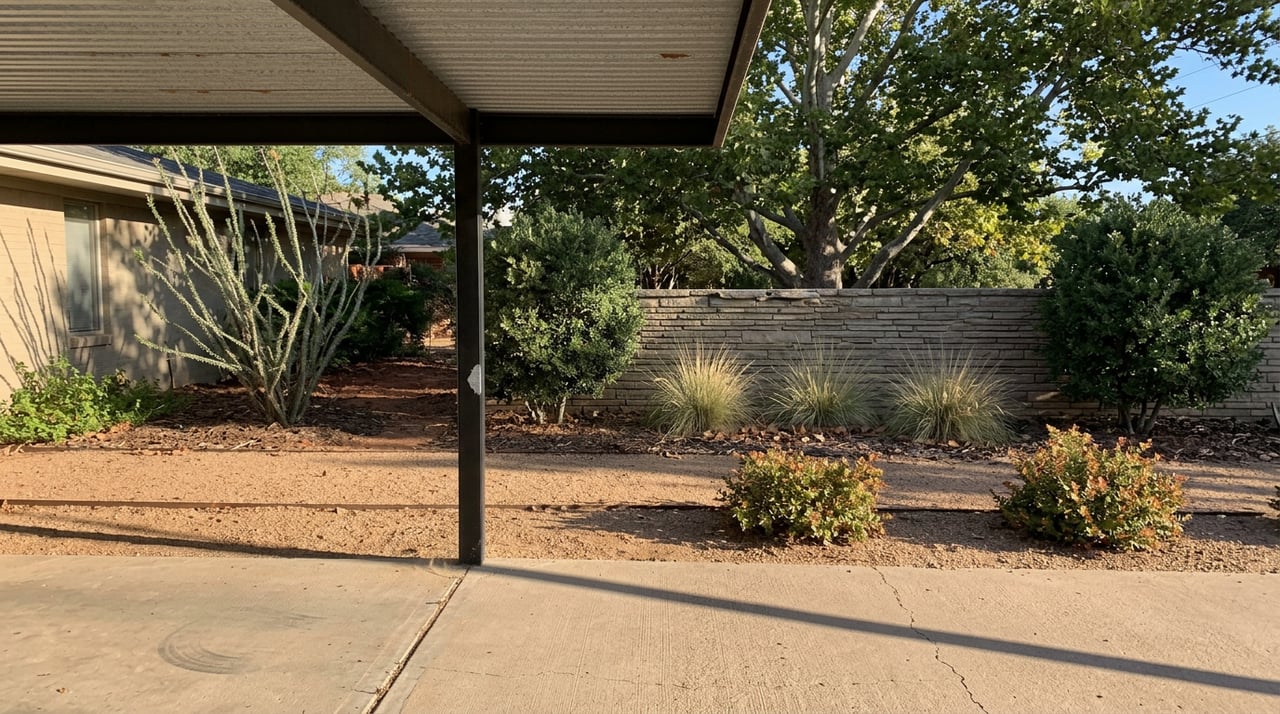
That's where the public record trails off, and where the neighborhood's own habits pick up the story. On Nextdoor, a recent post from a Lake Montezuma resident thanked a neighbor for volunteering to mow the overgrown stretch at the back of the old course, unprompted and unpaid. It's a small detail: since the sale, the resort remains a proposal, while the course's upkeep can fall to neighbors. The lake has water in it again as of the most recent public reporting. The course remains part of the 108-acre property.
The Water That Was Never in Question
If you measure this neighborhood by its water at all, the golf course pond was never really the point. Wet Beaver Creek and Dry Beaver Creek meet near McGuireville at the southern edge of the community, and despite sharing a name, the two behave nothing alike. Dry Beaver Creek earns its name most of the year. Public USGS gauge data tracked by Snoflo showed the creek running at 0 cubic feet per second on August 2, 2026, well below its already modest seasonal norm. Wet Beaver Creek, a short drive east, is spring-fed and never fully stops. Beaver dams along its length pool the water into small ponds year round, which is a large part of why the creek supports swimming holes that draw people from three counties even in a dry summer.
The most popular of those, known as The Crack, sits at the end of the Bell Trail. A few practical facts worth knowing before you go this month:
- The trailhead is at the Beaver Creek Day Use Area, 6825 N Forest Road 618, which also has creekside picnic tables, grills, and vault toilets.
- It's roughly 3.5 miles one way with about 500 to 580 feet of elevation gain, mostly exposed to full sun, ending in pools deep enough for cliff jumping.
- There's no fee or permit required to park at the trailhead, though the lot fills on busy weekends.
Closer to the interstate, Montezuma Well offers an easier version of the same idea: a half-mile loop around a limestone sinkhole fed by underground springs, free to enter, usually with a ranger stationed at the top. One thing to know if you're planning to walk it this month: the Swallet Trail spur has been closed since May 2026 to protect a bat colony, according to the National Park Service.
What the Name Actually Tells You
The lake got its name in the 1950s, when a developer needed something more appealing than "the old ranch pond" to sell lots to out-of-state buyers, so he named it after Montezuma Well down the road. That naming decision has now outlived a golf course, a foreclosure-adjacent sale, a nearly two-year drought, and at least one holiday protest. What hasn't changed is the creek people actually rely on for a swim on a hot afternoon, or the value of neighbors' volunteer efforts around the former course.
That's a pattern worth knowing if you live here, and it's the kind of thing worth understanding if you're thinking about what a proposed resort project next door might mean for the neighborhood down the line. Sylvia Ray has spent nearly four decades working the Verde Valley market, including the corner of it that borders this lake, and is glad to talk through what any of this means for your own plans. Reach out anytime for a free home valuation or market consultation.
This article is general information, not legal, tax or financial advice. Consult a qualified professional about your situation.