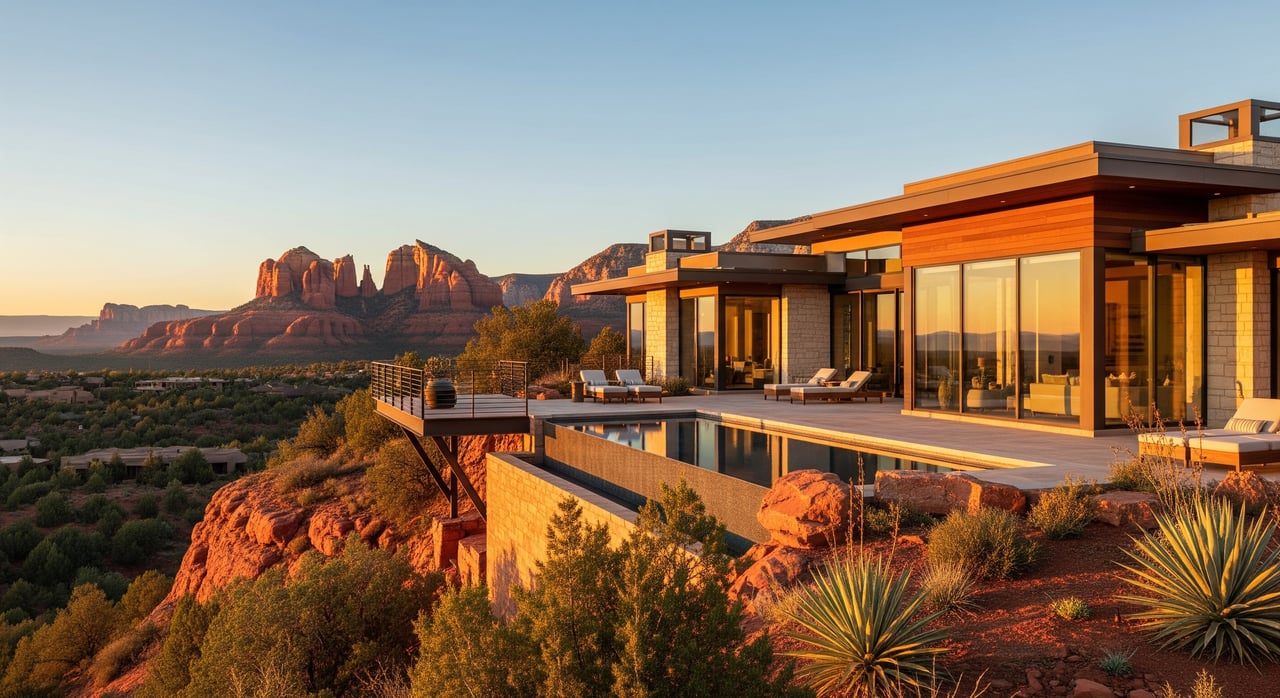
Is a Sedona red rock view priceless or just pricey? If you are buying or selling in Yavapai County, you know views turn heads and influence offers. The question is how much a specific view is worth and what tradeoffs buyers will accept. This guide breaks down what adds value, how pros select comps and adjust for view quality, and the practical steps you can take to price with confidence or make a smart offer. Let’s dive in.
What adds value in Sedona views
View quality and type
Not all views are equal. Buyers respond to how dominant and usable the view is from daily living spaces. Panoramic or focal views from the living room, kitchen, and primary suite carry more value than a partial glimpse from a side deck.
Common categories include panoramic, primary or focal, partial, and obstructed or intermittent. Close, intimate vistas often feel more dramatic than distant ridge lines. Lighting, seasonal color, and the sense of movement in the landscape can also enhance perceived value.
Orientation and light
Orientation shapes the view experience. West-facing exposures can deliver vivid sunsets that many buyers prize. South and east exposures bring different light and microclimate, which may matter for comfort and energy use.
Iconic formations are a draw across buyer segments. Cathedral Rock, Bell Rock, Courthouse Butte, Airport Mesa, the Chapel and Boynton areas, Schnebly Hill, and parts of Oak Creek Canyon are frequently named by buyers who seek a signature Sedona backdrop.
Siting, elevation, and topography
Elevation and siting influence how much of the vista you actually see and whether nearby construction could block it in the future. Higher positions often open up sightlines. Steep lots can deliver incredible views but may limit usable outdoor space and raise build or improvement costs.
Lot shape, setbacks, and neighboring rooflines matter. If the view relies on a narrow angle between trees or homes, buyers may discount for risk and limited experience.
Privacy and setting
Privacy amplifies the value of a view. Natural buffers that screen neighbors without blocking sightlines are a plus. Dense vegetation that cuts off key view corridors may require trimming or removal, which can add cost and sometimes permitting steps.
For many luxury and second‑home buyers, a sense of retreat is part of the view premium. Minimal visual intrusion helps the landscape take center stage.
Outdoor living and daily experience
Views that integrate with daily life are worth more. Terraces, decks, patios, pools, and wide door systems that connect indoor and outdoor rooms all increase buyer willingness to pay. Primary rooms and the primary suite should capture the view for the strongest pricing case.
If a home offers only one small perch to see the rocks, the premium is usually lower. The goal is a seamless view experience across how you live and entertain.
Road noise and access
Sedona’s scenic corridors create both appeal and activity. Proximity to state routes, park access roads, and busy tourist areas can bring noise that some buyers penalize. Easy access with limited noise intrusion is a positive.
Buyers often weigh a small noise penalty against a major view premium. Tolerance varies, which is why a clear pricing narrative matters.
View permanence and risk
Perceived permanence is critical. If a view could be blocked by future building, buyers typically discount. Factors include the size and zoning of nearby parcels, setback and height allowances, public land adjacency, conservation easements, and topography that limits development.
If your property borders protected land or terrain makes obstruction unlikely, document it to support value. If risk exists, price accordingly and disclose what is known.
Practical considerations
Wildfire risk, vegetation management, and insurance availability are part of Sedona’s environment. Water availability, sewer versus septic, and utility access can influence value for both homes and vacant view lots. Buyers factor these into total cost and risk tolerance.
How pros price view homes
Choose the right comps
Start with closed sales in the same micro‑neighborhood and viewshed. Matching orientation to the same formation is more useful than pulling distant sales with different views. Aim for recent closings within the last 90 to 180 days when available.
Match on high‑impact features such as finished square footage, bedroom count, condition and age, lot size and usable outdoor area, and garage or parking. Use a separate comp set for luxury finishes because price per square foot behaves differently at the high end.
Adjust for view quality
First, adjust comps for non‑view differences like size, beds and baths, condition, and outdoor living. Then attribute any remaining difference to the view. Many appraisers and brokers grade view quality on a simple scale and support adjustments with paired sales where the view is the main variable.
View premiums vary by intensity and buyer segment. Dominant panoramic views can justify meaningful percentage adjustments, while partial views are smaller. Local paired sales are the best evidence in Sedona.
Document and communicate
Use photos, MLS images, and maps to show why your adjustments are reasonable. Keep internal notes specific, for example: adjusted for panoramic Cathedral Rock views visible from main living areas. Public listing language should describe features clearly without over‑quantifying.
Seller strategy: pricing and presentation
- Price at the view grade. Align your list price with the actual view from primary rooms and main outdoor spaces.
- Demonstrate the view. Invest in professional photography from key rooms, plus drone and twilight images when appropriate.
- Highlight permanence. If public land backs the property or nearby lots have limits, include that documentation.
- Address negatives early. Trim sightline‑blocking vegetation where permitted and disclose any known noise sources so buyers can price fairly.
- Consider strategy options. In segments with strong demand, a slightly higher list with a clear view story can attract buyers who prioritize scenery.
Buyer checklist: before you offer
- Visit at different times of day and seasons. Check sunrise, sunset, glare, and tourist‑season traffic.
- Verify which rooms capture the view. Focus on living areas and the primary suite.
- Assess permanence. Review neighboring parcel size, zoning, setbacks, heights, and recent permits.
- Budget for improvements. Plan for vegetation work, outdoor living upgrades, and wildfire mitigation.
- Negotiate with evidence. Use documented comps and paired sales to calibrate the view premium when noise, partial views, or risk exist.
Common tradeoffs in Sedona
- Same price, different strengths. A slightly lesser view with better privacy and outdoor living can win for many buyers over a pure vista.
- Noise versus view. A dramatic corridor view may come with traffic sounds. Small price adjustments for noise are common.
- Buildability and timing. An unimproved view lot can offer a stunning outlook but may price below a finished home with a modest view once build costs and timelines are included.
Quick view rating worksheet
Use a simple 1 to 5 scale to stay objective when you compare homes:
- 1 Obstructed or intermittent: minimal or blocked view in daily spaces.
- 2 Partial: distant or limited angles, not dominant in main rooms.
- 3 Good: consistent red rock presence from key rooms or one strong outdoor area.
- 4 Primary or focal: dominant, unobstructed view from living areas and primary suite.
- 5 Panoramic signature: wide or wraparound vistas with notable lighting and orientation.
Rate the subject and each comp. Adjust for size, condition, and outdoor living first. Then consider the view score difference to guide your premium or discount.
Work with a local guide
Sedona view pricing rewards local know‑how. Inventory is tight in top view corridors, and buyer priorities differ between second‑home and move‑up segments. You gain an edge when your agent can match viewsheds, document permanence, and support adjustments with recent paired sales.
If you want clarity on where your property fits or how to value a specific view, reach out to a trusted local broker with decades of Sedona–Verde Valley experience. Request a free home valuation or market consultation with Sylvia Ray to move forward with confidence.
FAQs
How much is a Sedona red rock view premium?
- It depends on view intensity, orientation, permanence, and how the view is experienced from main rooms. Pros rely on recent paired sales in the same viewshed to support the premium.
Do west‑facing sunset views sell faster in Sedona?
- West‑facing views are highly prized for their sunset effect, but speed to contract still depends on price, condition, and supply in that micro‑neighborhood.
How can I tell if a view is protected from future building?
- Review nearby parcel size and zoning, height limits and setbacks, public land or conservation status, and terrain features that limit development. Use permits and recent activity for clues.
What if a home has a great view but some road noise?
- Buyers often weigh a small noise penalty against a strong view premium. Use comps with similar noise and view profiles to calibrate a fair adjustment.
Are steep hillside lots worth the view premium?
- They can be, but factor in build or improvement costs and the amount of usable outdoor space. Some buyers prefer an improved home with a modest view over a challenging lot with a dramatic outlook.