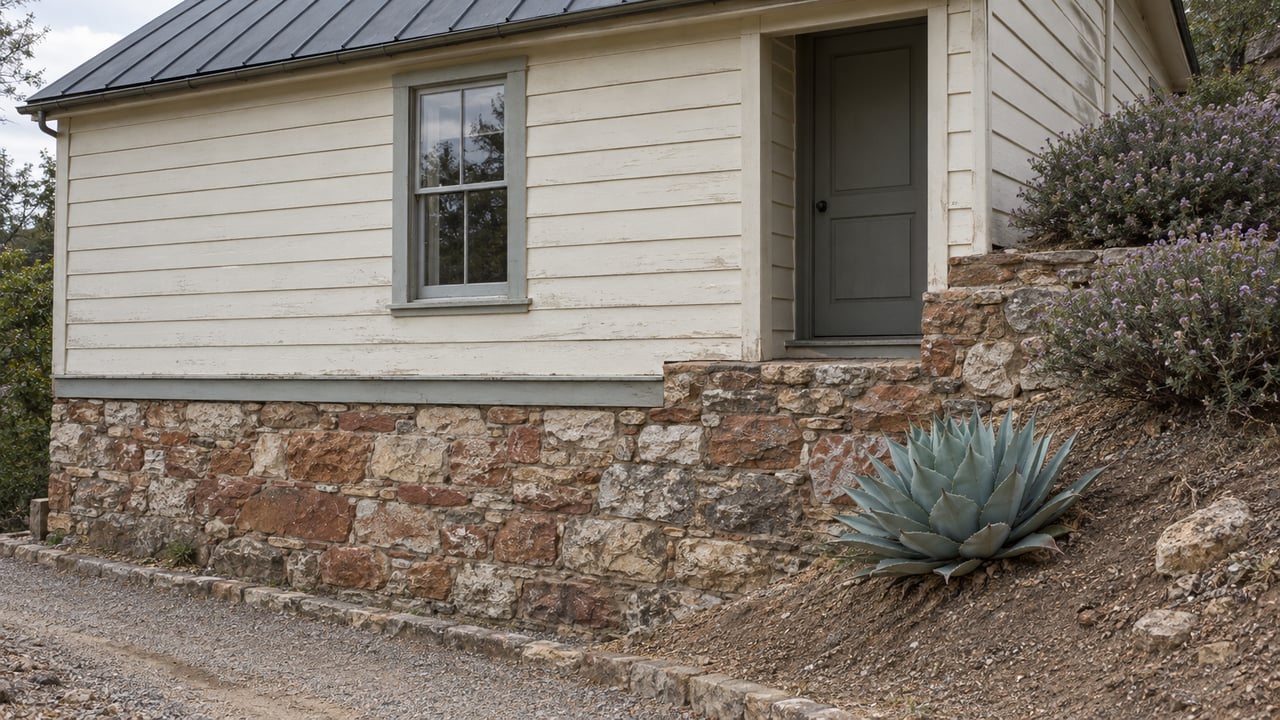
Below a parking lot off Hull Avenue sits a concrete cell block that used to be attached to a much larger building. It was built in 1905 as part of Jerome's jail. In 1938, dynamite blasting from the mines below shook the hillside loose enough that the cell block tore away from the rest of the structure and started sliding. By the time it stopped, it had traveled 225 feet and come to rest in the middle of what is now Hull Avenue, where it still sits behind a retaining wall and an iron fence. The Jerome Historical Society acquired it in 2017 and has talked about stabilizing it further.
Tourists photograph the Sliding Jail because it is a good story. For anyone buying property two or three streets away, it is something else: a documented, dated example of exactly what a structural inspector is trying to rule out on an ordinary residential lot. The hillside that moved in 1938 is the same hillside every home in town sits on. That fact, more than square footage or view, is what actually shapes how a Jerome purchase gets financed and closed.
The Escrow Clock Doesn't Match the Ground
A standard home inspection covers what is visible and accessible: the roof, the systems, obvious cracks and settlement signs. On a house built into native hillside material a century ago, that is not enough information to close on, and local market reporting from August 2026 confirms what anyone who has bought here already knows: foundation, electrical, plumbing, and grading assessments on Jerome's older buildings are not routine, and buyers need to build real extra time into their due diligence period rather than assuming a quick turnaround.
That extra time is not paperwork friction. It is the difference between an inspector confirming a crack is cosmetic and a structural engineer confirming whether the ground under a specific footing has moved in the last decade. Those are different professionals working on different timelines, and a contract clock written for a typical Verde Valley transaction usually does not leave room for both.
Why Cash Keeps Winning
That gap between what the inspection needs to cover and what a normal contingency period allows for is the real reason cash and cash-plus-construction packages made up roughly 40 to 50 percent of Jerome closings as of August 2026. Conventional lenders can underwrite a loan around almost anything if the numbers are known early enough. What they struggle with is an open-ended structural question that surfaces late in escrow, because a mortgage timeline was never built to absorb that kind of delay.
Buyers who pay cash are not necessarily wealthier than buyers who finance. They are buyers who can afford to let the structural picture take as long as it takes without a lender's clock running out from under them. That is a different kind of leverage than price, and it explains why financed offers in this town often lose out to cash offers that are not even higher.
How Jerome's Design Review Board Shapes Exterior Projects
Jerome's Design Review Board is made up of five members, all of whom live in town, each serving three-year terms, and it meets on the fourth Tuesday of every month. Its job, under the zoning ordinance, covers new construction, exterior alterations, additions, renovations, demolitions, and signs within the Historic Overlay District. The stated purpose is to preserve the town's
distinctive character, natural attractiveness, and overall architectural quality
and every project that touches an exterior wall, roofline, or paint color has to clear that standard before a building permit is even issued. Approval is also not permanent. Once the board signs off, a building permit has to be issued within six months or the applicant starts over.
That process is not always as simple as filing a form and waiting. Town records from a 2023 Planning and Zoning meeting show board members and the zoning administrator spending real time debating whether a garage project on Third Street counted as a remodel or as new construction, because the ordinance itself does not define the threshold between the two. The board settled it by treating the project the way it had been treated from the start, but the exchange makes a point worth carrying into any Jerome purchase: whether a project is "just a remodel" is not always the buyer's call to make. It is the board's.
Why Teardown Plans Don't Survive Contact With the Historic Overlay
A buyer looking at a run-down structure and picturing a clean lot with a new build on it runs into the same section of the ordinance. Demolition sits in the same review category as new construction and exterior alteration, which means clearing a historic structure to start over is subject to the same board that is charged with protecting the town's character, not a routine permit desk. In practice, current market reporting describes demolition approvals as rare, and restoration, not replacement, as the path most projects actually take.
That constraint compounds with something structural rather than procedural: Jerome's National Historic Landmark status, granted in 1967, effectively fixes the town's housing stock in place. No new subdivision is coming. The homes on the market today, in whatever condition, are close to the full inventory this town will ever have. Buyers are not just negotiating over an individual house. They are negotiating over one of a fixed number of structures that will ever exist here.
What August's Numbers Actually Say
Put those two pressures together, slower inspections and a board that rarely approves demolition, and the pricing picture from August 2026 starts to make sense on its own terms. Active listings were trading at roughly $290 a square foot on a list basis. Days on market had stretched to about 85, up from 78 in July, which tracks the town's usual monsoon-season slowdown rather than a shift in demand. Roughly half of active listings were already sitting at a reduced price.
A listing that has crossed 90 days on market in Jerome is not necessarily overpriced or in bad shape. It may simply be a property still working through the extended structural review that this town requires before any lender will sign off, which means a buyer with cash or a strong pre-approval walking into that listing at day 95 has more room to negotiate than the same buyer would have in a market where 90 days signals something has gone wrong.
| Due diligence step | Why it matters here |
|---|---|
| Structural and grading assessment by an engineer familiar with hillside soils | Standard home inspectors are not trained to evaluate century-old slope conditions |
| Request any Design Review Board history tied to the parcel | Past approvals, denials, or expired permits affect what you can legally do next |
| Confirm current short-term rental licensing directly with the town | Jerome permits STRs under state law but has revisited density and licensing rules in recent years |
| Ask whether federal or state historic tax credits apply | Substantial restoration work can qualify, changing the economics of a fixer purchase |
Before writing an offer on a Jerome property, it is worth lining up that structural engineer before the inspection period starts rather than after, since scheduling alone can eat into a short window. It is also worth asking the seller directly whether any exterior work on the property ever went through Design Review Board approval, and if so, whether that approval is still active or has lapsed past its six-month window.
A Few Direct Questions
Can I get a conventional mortgage on a Jerome home? Often, yes, but the lender will want the structural and grading questions resolved earlier in the process than a typical purchase timeline allows for, and building that time in up front avoids a late surprise.
Can I buy a fixer-upper and replace it with something new? Rarely. Demolition falls under the same Design Review Board process that governs new construction and exterior alterations, and current approvals for full replacement are the exception, not the rule.
Does every project in Jerome need board approval? Exterior work does, including new construction, alterations, additions, demolitions, and signage. The board's stated scope is the exterior design and character of the town, so purely interior changes generally sit outside its review.
Jerome rewards buyers who treat the hillside as part of the deal rather than a footnote to it. If you are weighing a specific property here and want to talk through what the structural timeline, the Design Review Board's history on that parcel, or the current cash-versus-financing math actually mean for your offer, Sylvia Ray has spent decades working Verde Valley transactions exactly like this one and can help you build a due diligence plan before you write the contract, not after.