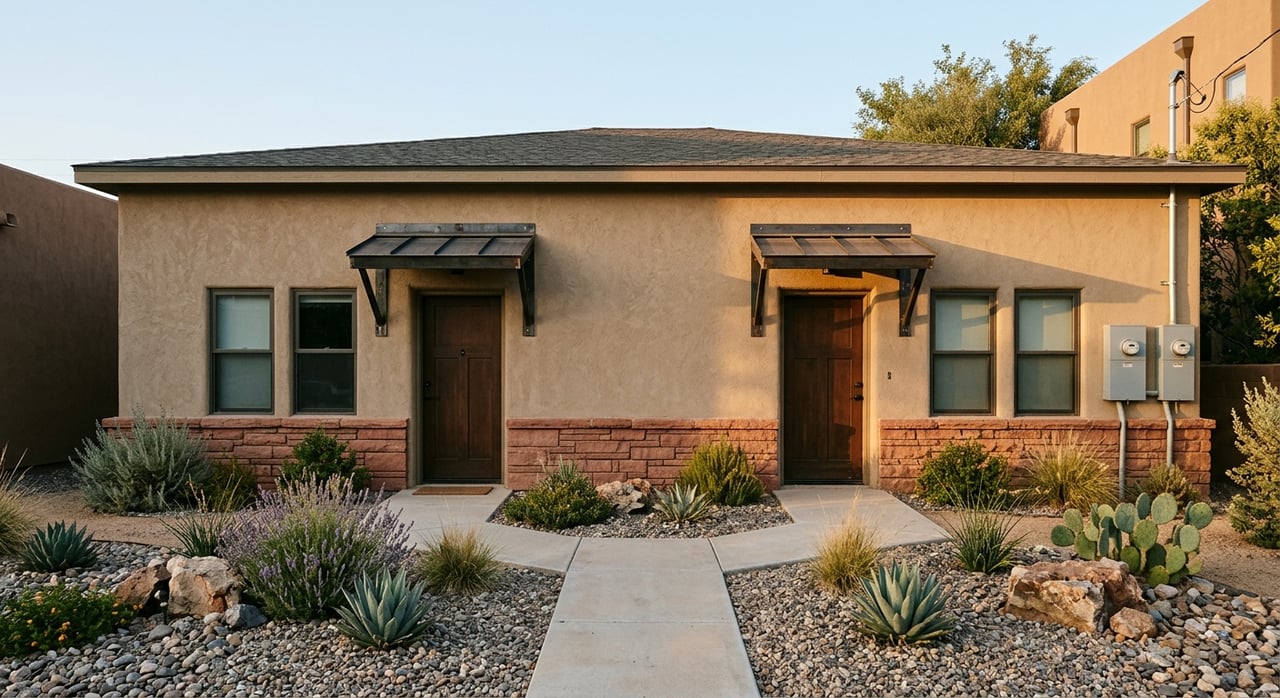
If you are looking at Clarkdale investment properties, the first thing to know is simple: this is not a big-volume market where you can rely on broad averages and fast turnover. Clarkdale is a smaller, more established town, and that can be a real advantage if you want to buy with a long-term plan and clear expectations. In this guide, you will learn where the opportunities may be, what numbers deserve a closer look, and which local rules should shape your due diligence before you buy. Let’s dive in.
Clarkdale is a small, established market
Clarkdale has 4,758 residents, 2,500 households, and 2,567 housing units. About 75% of homes are owner-occupied, and roughly 79% of the housing stock is single-unit housing. The median age is 59.8, which supports the idea that this is a steadier, longer-term market rather than a high-churn one.
For investors, that matters. In a town with more established ownership and limited inventory, you may see fewer opportunities at any given time, but the available properties can be more distinct. That makes local knowledge, property-level analysis, and patience especially important.
Price points need careful context
Clarkdale can look more approachable than the county at first glance. Census Reporter lists the median value of owner-occupied housing units at $373,600, which is below Yavapai County’s $450,000 median. That suggests a somewhat lower entry point than the broader county.
At the same time, current market trackers show a more nuanced picture. Redfin reports a median sale price of $449,731 for the three months ending May 2026, while Zillow reports an average home value of $466,421 and 56 homes for sale as of May 31, 2026. Redfin also shows a median 82 days on market, which points to a market where pricing, condition, and negotiation can have a meaningful effect on outcomes.
Rent estimates are not one-size-fits-all
One of the biggest mistakes an investor can make in Clarkdale is using a single citywide rent number without asking what type of property it reflects. Apartments.com reports an average apartment rent of $744 per month, while Zumper reports a median all-property rent of $1,967 per month in June 2026. That wide gap shows why broad rent averages can be misleading here.
For single-family investors, sample home-level estimates are more useful. Zillow examples show estimated rents of about $2,126 per month for a 2-bed, 2-bath home and about $2,412 per month for a 3-bed, 3-bath home. If you are underwriting a detached home, those kinds of property-specific comps will likely tell you more than any citywide average.
Cash flow may be modest on paper
Clarkdale does not appear to be a market where detached homes automatically produce strong cash flow based on rent alone. When sale prices are around $450,000 and sample single-family rents fall roughly between $2,100 and $2,400 per month, the spread may feel tight. That means your margin for error can be smaller if you overpay, underestimate repairs, or assume optimistic rent growth.
In practical terms, Clarkdale may fit investors who are comfortable with a disciplined buy-and-hold strategy. You may need to focus more on leverage, renovation upside, long-term appreciation potential, and careful expense control than on immediate high-yield returns. This is a market that tends to reward patient underwriting.
Historic homes are a real Clarkdale story
If you know Clarkdale, you know the original townsite is part of what makes the town stand out. Clarkdale was founded as a planned company town in 1912, and the original townsite is recognized as a Historic District on the National Register. Many original homes still stand, and town materials describe historic Craftsman, Mission, and Spanish Revival homes in that area.
That creates a real niche for buyers who like value-add projects with character. A well-planned restoration or rehab can be appealing in a market where place and history matter. But charm alone is not enough, and the due diligence on historic properties needs to be more detailed.
What historic rehab buyers should expect
If you are considering a historic property, build extra time and flexibility into your plan. The Historic Preservation Commission reviews exterior alterations and modifications to listed buildings, structures, or sites within identified historic districts or National Register properties. The town’s ordinance also sets procedures and design guidelines for construction and revitalization.
That can affect choices around materials, windows, trim, and exterior changes. Before you count on a quick cosmetic upgrade, make sure you understand the review process and how it could affect cost and timing. In Clarkdale, historic value can be part of the opportunity, but it also changes the execution.
Lower-maintenance homes may suit long-term holds
Not every investor in Clarkdale is looking for an older home with a rehab plan. Newer or lower-maintenance properties may appeal to landlords who want fewer repair surprises, simpler upkeep, or an easier experience from out of town. That can be especially relevant if you are building a small portfolio and want to keep operations manageable.
Current listing examples show that this type of inventory exists in Clarkdale too. Zillow examples include a 2018-built 2-bed, 2-bath home on Northstar Drive and a 2006-built 3-bed, 3-bath home on Bootleg Road, both with higher-end rental potential. For some buyers, that may be a cleaner fit than taking on a full historic renovation.
Demand in Clarkdale is tied to lifestyle and long-term need
Clarkdale’s appeal is less about scale and more about location and experience. Town materials highlight that Clarkdale is about 10 minutes from Jerome and 30 minutes from Sedona. They also point to local attractions and amenities such as the Verde Canyon Railroad, Verde River access points, Tuzigoot National Monument, parks, wineries, the Clarkdale Historical Society and Museum, and events in Town Park.
That mix can support tenant and buyer interest from people drawn to the Verde Valley lifestyle. Instead of a pure employment-corridor investment story, Clarkdale looks more like a place-based market where setting, character, and access to regional attractions play a larger role.
Housing demand looks durable
Clarkdale’s 2025 Housing Plan projects about 409 additional households between 2025 and 2035. The same plan estimates a need for 437 additional homes and 170 rental homes at a 3.7% vacancy rate. For investors, that points to underlying housing demand that could support well-positioned long-term rentals and selective development or redevelopment plays.
The housing plan also notes 49 homes in older neighborhoods that need repair or replacement. That is an important local signal. It suggests there may be room for investors who can identify older properties with realistic rehab paths and a solid end use.
Small commercial and mixed-use may deserve a look
If your investment goals extend beyond single-family homes, Clarkdale may offer selective opportunities in small commercial or mixed-use property. The town’s commercial uses comparison table shows that certain districts, including the Central Business District, can allow uses such as retail, offices, restaurants, sidewalk cafes, hotels or motels, and in some cases multifamily or residential uses.
The Central Business District Focus Area Plan also discusses filling vacant Main Street properties, improving pedestrian connections, and adding more residential development near downtown. For buyers considering a small commercial purchase, mixed-use concept, or adaptive reuse idea, that local planning direction is worth paying attention to early.
Regulations should shape your buying strategy
Clarkdale is not a loose-regulation market, and that is one of the most important things buyers should understand up front. The town’s planning division requires a pre-application meeting for projects involving design review, zone changes, conditional use permits, and similar approvals. The building division also states that permits are required for all new construction, including driveways, fences, structures, and remodeling.
That means your business plan should not stop at price and rent. If you expect to remodel, add improvements, change use, or reposition a property, you need to confirm what approvals may be required before you close.
Utility and site checks matter
Clarkdale’s planning page directs owners to the town utilities department for water and wastewater connections. It also directs owners to Yavapai County Development Services for wells and septic systems. For an investor, those details can directly affect budget, timeline, and feasibility.
Before you assume a value-add project will work, confirm service availability, utility capacity, and permit history. These are not side issues. In a smaller market, they can be the difference between a workable plan and a costly surprise.
Short-term rental buyers need to verify licensing
If you are thinking about a vacation rental strategy, do not assume you can sort it out after closing. Clarkdale states that all properties offered for short-term or vacation rental use require a town license, along with county and state requirements. The town also says properties must meet safety, health, and neighborhood-notification rules.
The permit form requires an emergency point of contact and acknowledgment of compliance with applicable laws and ordinances. If short-term rental income is central to your plan, confirm licensing requirements and operational obligations before you buy. In Clarkdale, that step belongs at the front of your diligence process, not the end.
What kind of investor may fit Clarkdale best
Clarkdale may be a strong match if you are a small-scale investor who values character, limited but real demand, and a long-term approach. It can also work if you are comfortable studying each property on its own merits instead of relying on broad market averages. In many cases, the best opportunities here may come from selective rehab, careful long-term holds, or targeted small commercial plays.
It may be a less natural fit if you are looking for rapid turnover, easy short-term execution, or strong cash flow straight from headline rent numbers. Clarkdale asks buyers to be thoughtful. The reward is a market with distinct identity, established neighborhoods, and investment stories that are often more durable than flashy.
If you want help evaluating Clarkdale AZ investment properties with local context, practical underwriting insight, and hands-on transaction guidance, reach out to Sylvia Ray. She can help you sort through inventory, local rules, and strategy so you can buy with more confidence.
FAQs
What should buyers know about Clarkdale home prices?
- Clarkdale pricing needs context because local data shows both a median sale price around $449,731 and an average home value around $466,421, while the owner-occupied median value is lower at $373,600, which suggests meaningful variation by property type, condition, and timing.
What should investors know about Clarkdale rental income?
- Buyers should avoid relying on one citywide rent number because apartment and all-property rent trackers vary widely, while sample single-family rent estimates around $2,126 to $2,412 per month may be more useful for underwriting detached homes.
What should buyers know about historic homes in Clarkdale?
- Historic properties can offer value-add potential, but exterior changes in identified historic districts or listed properties may be subject to review, so buyers should budget for added time, coordination, and possible design constraints.
What should short-term rental buyers know in Clarkdale?
- Clarkdale requires a town license for short-term or vacation rentals in addition to county and state requirements, and buyers should confirm safety, health, notification, and contact rules before purchasing.
What should buyers know about Clarkdale development and remodel permits?
- Clarkdale requires permits for new construction and remodeling, and some projects also require a pre-application meeting, so buyers should verify planning, zoning, and building requirements early in the process.
What type of investment strategy may work best in Clarkdale?
- Clarkdale may be better suited to long-term holds, selective rehab, lower-maintenance rentals, and certain small commercial or mixed-use opportunities than to fast-turn, high-volume, or purely cash-flow-driven strategies.