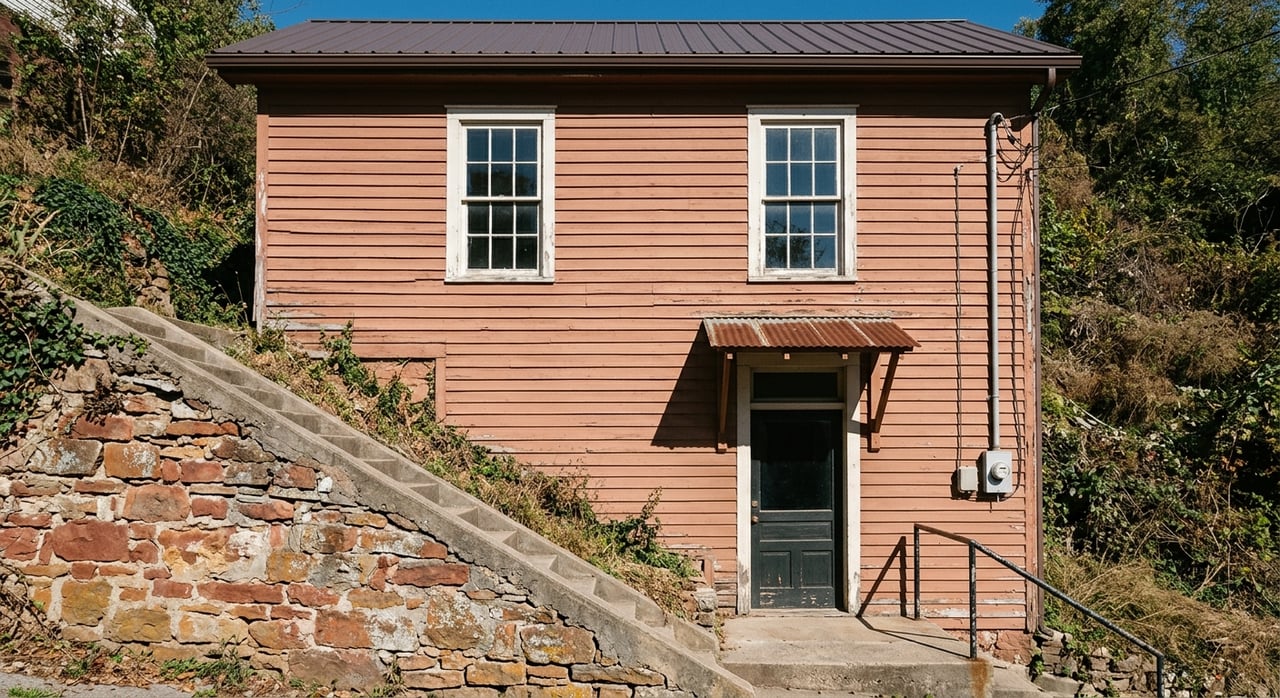
Thinking about buying in Jerome? It helps to know right away that this is not a typical Arizona housing market. Jerome is a steep hillside town with a strong preservation framework, so buying here often means evaluating access, parking, foundations, drainage, and renovation rules just as closely as square footage or finishes. If you want a clear picture of what makes Jerome homes and historic properties different, this guide will help you understand what to expect before you buy. Let’s dive in.
Why Jerome feels different
Jerome is best understood as a preservation-focused hillside market, not a flat-lot subdivision town. Town planning materials describe severe topography, sliding hills, and development patterns shaped by steep slopes. In practical terms, that means the housing stock is often older, more varied, and more constrained than what you may find in other Verde Valley communities.
The town sits on State Highway 89A in Yavapai County at over 5,000 feet and is part of the Verde Valley. Jerome also has a long-established historic identity, with the General Plan noting its designation as a State Historic Site and National Historic Landmark in 1967. That historic setting is a major part of the appeal, but it also shapes how properties can be maintained, updated, and used.
What kinds of homes you can expect
Older homes and historic structures
Because Jerome’s topography limits outward growth, the market is driven largely by restoration, rehabilitation, infill, and redevelopment. You should expect to see more older structures and renovated historic buildings than large pockets of new construction. If you are hoping for a conventional newer tract-home setup, Jerome may feel very different from your expectations.
Many homes are built into the hillside in ways that create unusual layouts. Town rehabilitation guidance notes that buildings may have partially exposed foundations, multiple levels stepping down the slope, and retaining walls that are essential to the site. These features can add character, views, and charm, but they also require careful evaluation.
Infill instead of expansion
Jerome’s General Plan says future growth must be absorbed primarily through infill and redevelopment within the urbanized area. That matters for buyers because it reinforces the idea that Jerome is not built for broad suburban-style expansion. Available properties may be limited, unique, and tied to site-specific constraints.
This is one reason buyers often need a more property-by-property approach here. Two homes that look similar online may have very different site access, structural needs, or renovation paths once you dig into the details.
Why hillside conditions matter so much
In Jerome, the lot can matter just as much as the house. Steep grades, retaining walls, drainage paths, and foundation conditions can affect safety, maintenance, renovation costs, and long-term usability. Cosmetic updates may look appealing, but Jerome’s own rehabilitation guidance says foundation integrity and drainage should come first.
That makes due diligence especially important. If you are considering a hillside property, you will want to look closely at how water moves across the site, whether retaining elements appear sound, and how accessible the home is in day-to-day use.
Access and driveways
Jerome’s zoning rules reflect the reality of difficult hillside access. For new construction, plans must show parking layout, turning space, ingress and egress, drainage, and grades. The code also says slopes above 35 percent require a topographic survey and engineer’s assessment, and driveway slope should not exceed 15 percent where possible.
Even if you are not building new, these standards help show what the town sees as important. In Jerome, access is not just about convenience. It is often a core part of whether a property will work well for your lifestyle and future plans.
Retaining walls and site stability
Retaining walls are common in Jerome, and they are not just visual features. On a steep site, they can be central to the property’s stability and drainage performance. Buyers should be prepared to consider inspection, engineering input, and repair history when evaluating a home on the hill.
If you are comparing homes, this is one area where a lower sticker price may not mean a better opportunity. A property with unresolved drainage or structural hillside issues can change your budget quickly.
Parking can shape daily life
Parking is one of Jerome’s most important quality-of-life issues. The town says residents may need to park far from their homes because parking opportunities are limited. That may be a minor inconvenience for some buyers and a major deal-breaker for others.
Jerome currently has four pay-to-park areas, free parking at the large 300 Level lot on Perkinsville Road, free shuttle service into and around town on Fridays, Saturdays, Sundays, and holidays, and some free Main Street parking. For visitors, that may sound manageable. For owners, it means you should understand exactly how parking works for a specific property before you commit.
Off-street parking rules
The zoning code is clear about parking requirements. In most residential cases, the code calls for 2 spaces per dwelling unit, while apartment units generally require 1.5 spaces per unit. Residential parking must be on the same lot or parcel as the use it serves, and off-street parking must have access to a public street.
For mixed-use properties, the required parking for each use is added together. That can become a significant factor if you are looking at a building with both residential and commercial potential.
Historic overlay and design review
Jerome’s Historic Overlay District covers all areas within the town limits. The stated purpose is to protect the town’s historical quality and distinctive architectural character because that character is closely tied to the town’s economic and environmental well-being. For buyers, that means preservation is not a side issue. It is built into ownership.
The Design Review Board has broad responsibilities. It reviews exterior design, exterior alterations, signs, landscaping, and proposed demolition to help ensure compatibility with the surroundings. The zoning ordinance also allows demolition to be postponed for up to 180 days while preservation options are explored.
What repairs may need review
Not every repair triggers a full review process. The ordinance exempts ordinary maintenance and repair when the same materials are used. Still, review by the Zoning Administrator may be required for changes such as roof material or color, parking areas, patios, exterior stair replacement with fire-resistant materials, and window or door replacements that must match the original size and style.
This is a key point for buyers who are planning updates. A project that feels straightforward in another town may involve extra review steps in Jerome.
Materials matter in Jerome
Jerome’s rehabilitation guidance encourages preservation of historically significant features and emphasizes compatible footings, mortar, and foundation work. It also discourages visually incompatible exterior materials such as vinyl siding, Masonite, or aluminum on historic exteriors. If you are planning a remodel, your design choices may need to align closely with the property’s historic character.
That does not mean you cannot improve a property. It means the process often works best when you budget for compatibility, structural evaluation, and review time from the start.
Renovation budgets should go beyond finishes
In Jerome, renovation planning should include more than kitchens, baths, and paint. Based on the town’s slope, grading, foundation, and design-review rules, buyers should expect to account for engineering, retaining-wall inspection, drainage review, and permitting time when needed. Those costs may not appear in listing photos, but they can have a real impact on your total investment.
Earthwork can also trigger review. The zoning ordinance says excavation or grading over ten cubic yards requires permits and planning review, with attention to drainage, adjacent-property impacts, scenic views, and site stability. Work is also expected to blend into the natural landforms rather than leave exposed scars.
For many buyers, the smartest mindset is to treat Jerome property ownership as stewardship. That approach fits the town’s character and can help you make more informed decisions from the beginning.
Utilities and infrastructure deserve attention
Interiors matter, but utility systems and infrastructure matter too. Jerome provides water, sewer, and trash collection within and near town limits. At the same time, the General Plan notes that the gravity-fed water system dates to the late 1800s and remains difficult to maintain, while sewer capacity and limited room for expansion at the treatment site are ongoing constraints.
This does not mean you should avoid buying in Jerome. It means you should ask thoughtful questions about service, property condition, and future improvement plans, especially if you are comparing Jerome to communities with newer infrastructure.
Firewise stewardship is part of ownership
Jerome is a Firewise USA Community, and the fire department can help with fuels remediation and dead-tree or brush removal. For buyers, that is a reminder that hillside and forest-adjacent ownership often comes with an added layer of property stewardship. Outdoor maintenance is not just about appearance. It can also be part of risk reduction.
If you are buying from out of area or planning a second home, this is especially important to factor into your ownership plan.
Mixed-use and rental opportunities
Some buyers are drawn to Jerome for a live-work setup, a small commercial opportunity, or a rental strategy. There can be opportunities here, but they tend to be tightly regulated and highly site-specific.
Small-scale commercial use
Jerome’s C-1 district permits retail, service businesses, hotels, restaurants, offices, studios, and other enclosed commercial uses. Residential use of a building, including apartment houses, is allowed only as a conditional use when the Planning and Zoning Commission finds little or no adverse effect. Outdoor storage and outdoor display are prohibited.
The General Plan says commercial infill capacity still exists in the commercial zone and recommends encouraging commercial activity there while protecting residential areas from commercial encroachment. In other words, Jerome may suit a small, compatibility-sensitive project better than a more intensive redevelopment concept.
Home occupations and bed-and-breakfast uses
In the R1-10 and R1-5 zones, residential home occupations are explicitly allowed, and the parking schedule assigns no additional parking requirement for them. Bed-and-breakfast uses are listed as conditional uses in those residential districts. If you are exploring an owner-occupied business concept, zoning details should be part of your early review.
Short-term rentals and tax licensing
If you plan to use a property as a vacation rental, Jerome requires a short-term rental license before operation. The town also states that residential rental owners need an Arizona transaction privilege tax license for taxable rental income. Buyers who assume they can rent first and sort out compliance later may run into delays, so it is wise to confirm the requirements early.
Is Jerome the right fit for you?
Jerome can be a wonderful fit if you value character, historic setting, hillside views, and a one-of-a-kind property experience. It often appeals to buyers who want something distinctive and are comfortable with preservation rules, limited parking, and a more hands-on approach to property care. It can also fit some small-scale investor or owner-operator goals when the zoning and site conditions line up.
At the same time, Jerome may be a weaker fit if you want easy parking, low-friction remodeling, or conventional suburban convenience. Buying here usually goes best when you understand the tradeoffs clearly and match the property to your real daily needs.
With long experience across Sedona and the Verde Valley, Sylvia Ray helps buyers look past the surface and evaluate what a Jerome property really offers, from hillside access to long-term usability. If you want practical guidance on buying a historic or hillside property, reach out to Sylvia Ray for a free home valuation or market consultation.
FAQs
What makes Jerome homes different from other Verde Valley homes?
- Jerome homes are often older, hillside-built, and shaped by preservation rules, limited parking, and site conditions such as drainage, retaining walls, and steep access.
Do Jerome historic properties have renovation restrictions?
- Yes. Jerome’s Historic Overlay District covers the entire town, and exterior changes, demolition, materials, and some repairs may require review for compatibility with the historic setting.
Is parking difficult when buying a home in Jerome?
- It can be. The town says parking opportunities are limited, and some residents may need to park far from their homes, so parking access should be verified for each property.
Can you buy a Jerome property for short-term rental use?
- Possibly, but Jerome requires a short-term rental license before operating a vacation rental, and rental owners also need to review Arizona transaction privilege tax licensing requirements.
Are hillside inspections important when buying in Jerome?
- Yes. Foundation integrity, drainage, retaining walls, driveway access, and overall site stability are especially important in Jerome because of the town’s steep slopes and sliding-hill conditions.
Can a Jerome property work for a live-work setup?
- In some cases, yes. Certain commercial and residential zones allow small-scale business uses, home occupations, or conditional uses, but the zoning, parking, and compatibility rules need to be reviewed carefully for each property.